A Cidadel, a Lake, a Pagoda, a Temple & a Mausoleum...
- Liz

- Jan 23, 2025
- 9 min read
Updated: Apr 19, 2025
A second post today - someone is certainly trying to catch up on the missing blog posts ;)
Hanoi, Day 59
Today's plan is to explore the northwestern section of central Hanoi.
We aim to walk to the West Lake and hopefully get some nice views across the water, and also to see what we come across en route. The day is quite cool when we set off, and I expect that it will heat up as the mist burns off, so I just take my little scarf to use as a shawl (Top Tip: this also comes in handy when we come across any temples that require shoulders to be covered).
We have to cut through some busy market street,s which all seem to be filled with red items relating to the upcoming Chinese New Year and Tết celebrations.
Tết, short for Tết Nguyên Đán 'Festival of the first day', is the most important celebration in Vietnamese culture. Tết celebrates the arrival of spring based on the Vietnamese calendar and usually has the date in January or February in the Gregorian calendar.

Vietnamese people celebrate Tết annually, which is based on a lunisolar calendar (calculating both the motions of Earth around the Sun and of the Moon around Earth). Tết is generally celebrated on the same day as Chinese New Year (also called Spring Festival), with the one-hour time difference between Vietnam and China resulting in the new moon occurring on different days. Rarely, the dates of the Vietnamese and Chinese Lunar New Year can differ, as such in 1943, when Vietnam celebrated Lunar New Year, one month after China. It takes place from the first day of the first month of the Vietnamese lunar calendar (around late January or early February) until at least the third day.
Tết is also an occasion for pilgrims and family reunions. They set aside the trouble of the past year and hope for a better and happier upcoming year. This year, Tết runs from 25th January until the 2nd February. We won't be in Vietnam by then, but it would have been interesting to see what the place is like during this time. From what we have heard from others, a lot of things will close over this period, and the streets will be a lot quieter as people go home to celebrate with their families during this time.


Everywhere there are items and gifts for sale relating to this event, even when you go into the small grocery stores, there are gift-wrapped grocery items that are suitable as presents. Seeing the massive firecrackers being sold in one of the really busy marketplaces got my attention, though, as I could just imagine the mayhem that would be caused if these were to be set off accidentally (or even deliberately).
On our way, we pass the North Gate of the Imperial Citadel of Thăng Long.
The Imperial Citadel of Thăng Long is a complex of historic buildings associated with the history of Vietnam, located in the centre of Hanoi, Vietnam. Its construction began in 1010 and was completed in early 1011 under the reign of Emperor Lý Thái Tổ of the Lý dynasty. Most of the existing structure is dated to the extensive reconstruction of the old Imperial Citadel ordered by Gia Long in 1805, but the Citadel (except for the North Gate and the Flag Tower) was largely demolished by the French to allow more land for offices and barracks.
We only have a brief stop off here as we were not planning on visiting this, and we didn't want to pay to get in for a few photos as our aim was to get to the lake area. As usual there were lots of young girls around getting their photos taken and there were various flower sellers in this area too.
What was really interesting though was that there are still two massive holes in the gate wall that were caused by the France cannon when they used gunboats to attack Hanoi from Red River in 1882. These can't really be seen in my phone photos but they were impressive to see.


We passed several military or government buildings as we made our way to the West Lake, and it was interesting to see signs of no photography in some areas as well as all the military guards at their station posts. We kept thinking we were going to get shouted at or be in trouble for something. We managed to negotiate our way through the traffic and we finally arrived at the West Lake area. From here, I could see the back area of the Ho Chi Minh Mausoleum, so I guess that is why there are so many military guards in this area.
West Lake is the biggest freshwater lake of Hanoi and is located northwest of the city center. With a shore length of 17 kilometres (11 mi) and 500 hectares (5.0 km2) in area, this is the largest lake of the capital and a popular place for recreation with many surrounding gardens, hotels and villas. A small part of West Lake is divided by Thanh Niên Road to form Trúc Bạch Lake. Most of the lake is located within the Tây Hồ District, named after the lake.


Unfortunately, the mist/fog (we're not sure what it is) has not cleared by the time we reach the lake, and it's a bit disappointing. Part of me cannot help but think it's more like a smog with the temperature and all the scooter traffic. The lake itself was quite large, and people were fishing, walking and running around it.
West Lake is bordered by many significant places in the history of Hanoi and Vietnam. Trấn Quốc Pagoda, an ancient Buddhist temple in Vietnam, was built in the 6th century by Emperor Lý Nam Đế and is located on a small island in the middle of the lake, and this is where we head to next.
Trấn Quốc Pagoda is the oldest Buddhist temple in Hanoi, and is located on a small island near the southeastern shore of Hanoi's West Lake. It was originally constructed in the sixth century during the reign of Emperor Lý Nam Đế (from 544 until 548), thus giving it an age of more than 1,500 years. When founded the temple was named Khai Quốc (National Founding) and was sited on the shores of the Red River, outside of the Yên Phụ Dyke. When confronted with the river's encroachment, the temple was relocated in 1615 to Kim Ngư (Golden Fish) islet of Hồ Tây (West Lake), where it is now situated.
The pagoda is one of the main parts of the Trấn Quốc Temple for it holds the important monk's ashes. Most of the pagodas were made in the 17th century.
Monks have lived at the Trấn Quốc Pagoda for centuries, teaching the ways of Buddhism to the public. Before the visitors start arriving, the monks pray at the multiple shrines spread around the grounds. Monks do not get married and therefore do not live with families at the pagoda.
With its harmonious architecture taking advantage of the watery landscape, the pagoda is a picturesque attraction. The sunset views from the temple grounds are renowned.
Among the historic relics are statuary pieces dating to 1639.
The worshipers who come inside the temple to pray can come anytime they want. However, it is especially popular during the 1st month of the Vietnamese calendar. They pray in many small and large shrines all around the temple.


Sadly, the pagoda was closed when we got there, as it closes between 11:00- 13:30hrs (we didn't know this at the time). So after taking a few photos from here, we moved on again and started to head back the way we had come.
Near Trấn Quốc Pagoda is Quán Thánh Temple, one of the Four Sacred Temples of ancient Hanoi
Quán Thánh Temple, also known as Trấn Vũ Temple, is a Taoist temple in Hanoi, Vietnam. Dated to the 11th century, the temple was dedicated to Xuan Wu, or Trấn Vũ, one of the principal deities in Taoism. As one of the Four Sacred Temples of the capital, Quan Thánh Temple is located near West Lake in a ward of the same name: Quán Thánh Ward, and is one of the leading tourist attractions in Hanoi. The temple's name means Place (alternatively shop/restaurant) of the Gods. The name of the long street running by the temple is also called 'Quán Thánh' street.

Legend has it that Quán Thánh Temple was established during the reign of Emperor Lý Thái Tổ (reigned 1010–1028) and was dedicated to Trấn Vũ, Deity of the North in Taoism, whose symbols of power are the serpent and turtle. It is one of the Four Sacred Temples that were built in four directions to protect the capital from malevolent spirits. Quán Thánh protects from the North, while the other three temples protect from the other directions: Bạch Mã from the East, Kim Liên from the South, and Voi Phục from the West.
Another quite interesting thing to see in this temple was the number of Chivas Regal whisky bottles that were part of the offering (I think there were 12 bottles and you can just about see them in the above photo). Not that R or I drink whisky, but with the price of alcohol here being really expensive (unless it's Vietnam beer), I could just imagine some unscrupulous jakey types from the UK trying to snaffle one or two of these from the offering table....


Nowadays, after many geographical changes to the city layout, Quán Thánh Temple is located on the corner of Quán Thánh Street and Thanh Niên Street, facing West Lake. It is a short walk from Trúc Bạch Lake, where pilot (and future United States senator) John McCain was shot down in October 1967.
After the temple, we decide to head to see the Ho Chi Minh Mausoleum as it's in this area.
The President Ho Chi Minh Mausoleum is a mausoleum which serves as the resting place of Vietnamese revolutionary leader and President Ho Chi Minh in Hanoi, Vietnam. It is a large building located in the centre of Ba Đình Square, where Ho, Chairman of the Workers' Party of Vietnam from 1951 until he died in 1969, read the Declaration of Independence on 2 September 1945, establishing the Democratic Republic of Vietnam. It is open to the public every morning except Monday and Friday.



Construction work on the building began on September 2, 1973, and the mausoleum was formally inaugurated on August 29, 1975. It was inspired by Lenin's Mausoleum in Moscow but incorporates distinct Vietnamese architectural elements, such as the sloping roof. The exterior is made of grey granite, while the interior is grey, black and red polished stone. The mausoleum's portico has the words "Chủ tịch Hồ-Chí-Minh" (President Ho Chi Minh) inscribed across it. The banner beside says "Nước Cộng Hòa Xã Hội Chủ Nghĩa Việt Nam Muôn Năm" (en: "Long live The Socialist Republic of Vietnam").

The structure is 21.6 metres (70 ft 10 in) high and 41.2 metres (135 ft 2 in) wide. Flanking the mausoleum are two platforms with seven steps for parade viewing. The plaza in front of the mausoleum is divided into two hundred forty green squares separated by pathways. The gardens surrounding the mausoleum have nearly 250 different species of plants and flowers, all from different regions of Vietnam. Also, during parades, the tribune is used as a viewing stage for leaders to watch from, similar to the tribune of Lenin's Mausoleum.
The embalmed body of President Ho Chi Minh is preserved in the cooler, central hall of the mausoleum, which is protected by a military honour guard. The body lies in a glass case with dim lights. Wikipedia says that the mausoleum is generally open to the public.
I'm not sure if this is open to the public, as we didn't see any entrance or ticketing booths anywhere, and it has a very heavy military presence with clear demarcation lines of where you cannot go. Again, we encountered several signs saying 'no photographs' in this area, but that may have been related to the Presidential Palace, which is located very near the mausoleum also. We did have to go through a metal detector, and we heard several whistles being blown at tourists, though it wasn't quite clear why - possibly they were taking forbidden photos?
The mausoleum building is very impressive as are the grounds surrounding it but it did feel quite scary in a way as there were lines that you were not permitted to cross on the grounds and everyone was quite quiet, even the tour groups that we saw.
After we'd taken some photos of this, we went and had a look at the One Pillar Pagoda temple in this area before checking out the Ho Chi Minh Museum building (this was also closed at the time we were there (it closes from 12.00-14.00hrs) but we hadn't planned on visiting it as we had covered quite a bit of walking by this stage.


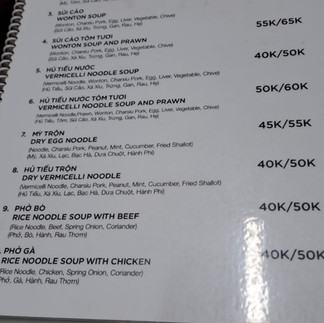
On our way back to the hotel, we found a little restaurant that looked quite decent and reasonble, it also had a number of tourists eating in, so we stopped off here and had something to eat. I had a fried rice dish and R had a noodle dish - both were excellent.
We past another interesting landmark on our way back but we didn't have the energy or interest to go and visit this, but we took a photo of it in the backgroud to find out what it was later (spolier alert: we fforgot and didn't find out what it was).




A rough route of today's walk is below.

Hanoi, Vietnam
17 January 2025


Comments